1. Industry Context: Energy Costs and OPEX Challenges in Latin American Telecom Sites
Across Latin America, as operators expand 4G coverage and roll out 5G infrastructure, equipment density in telecom equipment rooms and core data hubs continues to rise. However, high regional electricity tariffs and unreliable grid infrastructure in certain areas make power usage one of the highest operational expenditures (OPEX) for local telecom providers.
Within core equipment rooms, legacy 48V DC power systems with lower conversion efficiency generate substantial waste heat during AC to DC conversion. This inefficiency incurs a double penalty: higher direct utility costs and increased load on central HVAC and cooling systems. Consequently, adopting high-efficiency 48V modular power systems to cut electrical losses and reduce thermal strain has become a crucial strategy for Latin American operators to optimize OPEX.
2. Key Selection Criteria: Technical Benchmarks for High-Efficiency 48V Power Modules
To effectively minimize energy losses and lifecycle operating costs in central equipment rooms, telecom engineering and procurement teams evaluate AC/DC rectifier modules against strict performance criteria:
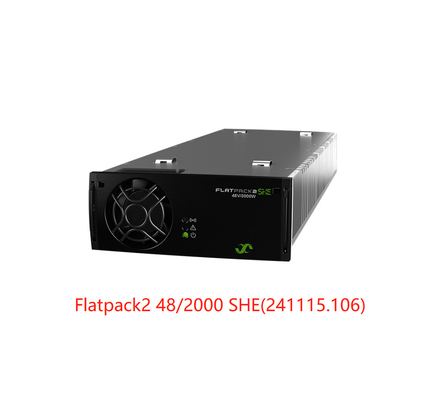
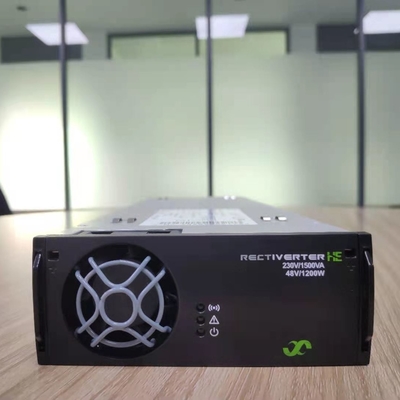
High Conversion Efficiency to Lower Thermal Load: Adopting High Efficiency (HE) rectifier modules with peak conversion efficiency up to 96.5% reduces internal power loss by approximately 50% compared to traditional 90%-efficient units. Lower thermal dissipation directly decreases the cooling energy required by facility HVAC systems.
Wide-Temperature Envelope and Thermal Derating: To handle severe environmental conditions in unconditioned shelters and outdoor cabinets, rectifiers must operate across a wide temperature range from -40°C to +75°C. Intelligent thermal derating protects the system above 55°C, ensuring a steady 1200W output even at 75°C instead of causing sudden site shutdowns.
Mains Resilience and Overvoltage Protection: To withstand regional electrical grid fluctuations, rectifiers require a wide AC input range of 85–300 VAC, an automatic disconnect safety function for voltages above 300 VAC, and internal varistors for transient surge protection.
3. Maintenance and Architecture: Live Hot-Swappability and Reduced TCO
Beyond energy savings, operational simplicity directly influences long-term equipment maintenance expenses in telecom facilities.
Modular 48V rectifiers supporting plug-and-play and live hot-swapping allow field engineers to perform capacity additions or maintenance without interrupting active DC power to downstream active equipment. Supported by a verified Mean Time Between Failures (MTBF) exceeding 350,000 hours (per Telcordia SR-332 standards), this architecture lowers site visit frequencies and Mean Time to Repair (MTTR), thereby optimizing Total Cost of Ownership (TCO) over the site lifecycle.
4. Conclusion and Implementation Strategy
For Latin American telecom operators seeking to mitigate high energy costs, deploying high-efficiency, wide-temperature, hot-swappable 48V modular rectifiers offers a proven engineering path toward lower OPEX. Procurement teams and network architects should evaluate equipment based on efficiency curves across typical 30%-70% load levels, high-temperature derating thresholds, and full compliance with global telecom standards such as UL 60950-1 and NEBS.


 پیام شما باید بین 20 تا 3000 کاراکتر باشد!